

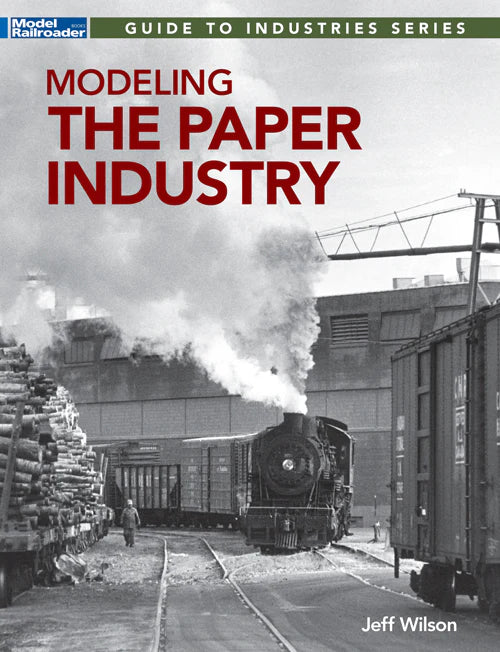
What if your layout served a paper mill?
The paper industry has been a key source of traffic for railroads since the 1800s. From large rolls of newsprint bound for printers to inbound loads of pulpwood, wood chips, clay, and more, railroads carry the products. Now you can add this fascinating industry to your layout with Modeling the Paper Industry, a key source for railfans, rail historians, and those who want to model the paper industry.
Features
- Paper industry history, how manufacturing processes have evolved, and how changes affected rail traffic
- Specialized wood chip and pulpwood cars, plus mill traffic in boxcars, tank cars, and covered hoppers
- How railroads switch paper mills
- Selectively compressing mill components to make them fit more easily on a model railroad
- Softcover, 112 pages (8.25" × 10.75")
- Published by Kalmbach
What if your layout served a paper mill?
The paper industry has been a key source of traffic for railroads since the 1800s. From large rolls of newsprint bound for printers to inbound loads of pulpwood, wood chips, clay, and more, railroads carry the products. Now you can add this fascinating industry to your layout with Modeling the Paper Industry, a key source for railfans, rail historians, and those who want to model the paper industry.
Features
- Paper industry history, how manufacturing processes have evolved, and how changes affected rail traffic
- Specialized wood chip and pulpwood cars, plus mill traffic in boxcars, tank cars, and covered hoppers
- How railroads switch paper mills
- Selectively compressing mill components to make them fit more easily on a model railroad
- Softcover, 112 pages (8.25" × 10.75")
- Published by Kalmbach